
Do And Don't
Warm Modern Living Room Ideas: How to Make a Space Feel Calm, Cosy and Expensive
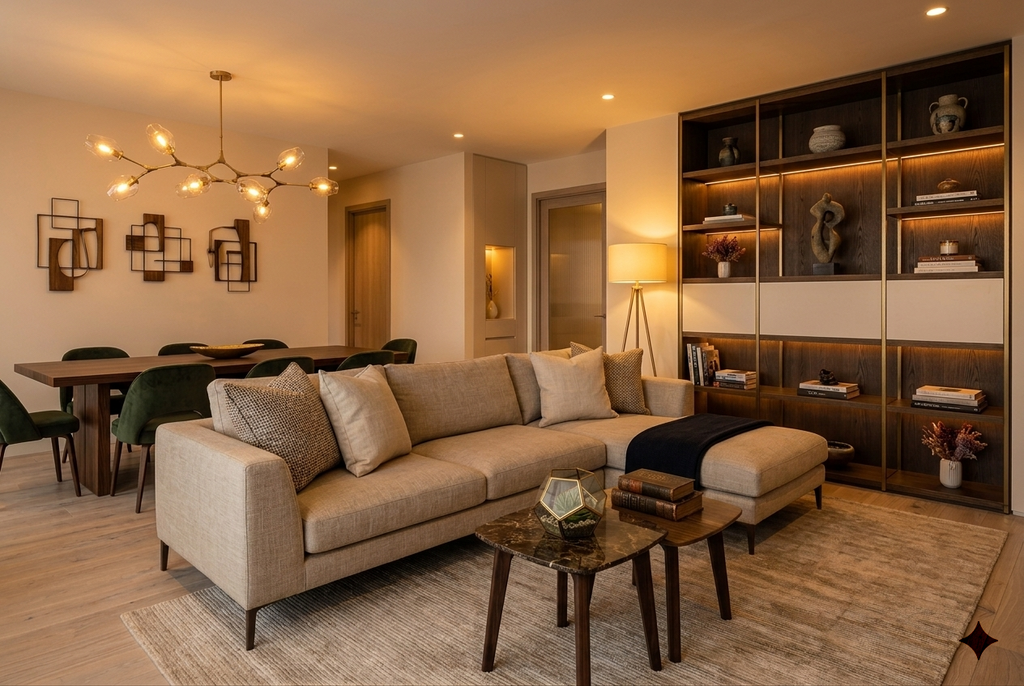
There is a certain kind of living room that stops you the moment you walk in. Nothing is loud. Nothing is competing for attention. The light is low and golden, the sofa looks like it wants you to sit down, and every object on the shelf seems to have been placed there on purpose. That is the warm modern look — and the good news is that it is far easier to recreate than it appears.
What is a warm modern living room?
Warm modern is what happens when minimalism stops being cold. Traditional modern interiors lean on white walls, grey furniture and hard edges, which look sharp in photographs but often feel unwelcoming to actually live in. Warm modern keeps the clean lines and the clutter-free discipline, then softens everything with natural materials and a gentle colour story.
Think oatmeal and sand instead of stark white. Walnut and oak instead of chrome. Linen and boucle instead of slick leather. The room still reads as contemporary, but it invites you in rather than asking you to admire it from a distance.
Why does this style work so well?
Because it solves the problem most people actually have. Very few of us live in a magazine. We have books, chargers, blankets, half-finished cups of tea and children who leave things everywhere. A room that is too austere fights that reality every single day. A warm modern room absorbs it.
The neutral base does the heavy lifting here. When your sofa, rug and walls all sit within the same tonal family, small amounts of everyday mess simply stop registering as mess. Add depth with texture rather than colour and the space stays calm even on a chaotic Tuesday evening.
There is a practical benefit too. Neutral, timeless pieces do not date. A bold teal sofa is a five-year commitment at best. A well-made sand-coloured sectional will still look correct a decade from now, and you can change its entire personality with a different set of cushions for the price of a takeaway.
Where do you start?
Begin with the largest surfaces. Walls and flooring set the temperature of the whole room. Choose a wall paint with a warm undertone — creams, soft beiges, greige — rather than a blue-based white. Pair it with light oak or a mid-tone wood floor and you have already done sixty percent of the work.
Choose one anchor piece. In most living rooms this is the sofa. A low-profile sectional in a textured neutral fabric gives you generous seating without visually crowding the room, and its horizontal line makes ceilings feel higher than they are.
Layer a rug underneath, not around. The most common mistake is a rug that is too small. As a rule, the front legs of your seating should sit on the rug. A jute or wool rug in a natural shade adds warmth underfoot and quietly defines the seating zone in an open-plan space.
Build a focal wall with storage. Floor-to-ceiling shelving in a dark wood does two jobs at once: it gives you somewhere to put things, and it provides the contrast that stops a neutral room from looking flat. Style the shelves at around seventy percent capacity — leave breathing space, group objects in odd numbers, and mix heights.
Get the lighting right. This is the step people skip, and it is the one that matters most. A single ceiling light will flatten any room, no matter how good the furniture is. Aim for at least three sources at different heights: a sculptural pendant or chandelier overhead, a floor lamp beside the seating, and integrated strip lighting inside shelving. Warm bulbs in the 2700K range give you that golden, unhurried glow.
Finish with texture and a single accent. Knitted throws, a woven cushion, ceramic vases, a stack of hardback books, a few dried stems. Then allow yourself one deeper accent colour — forest green, charcoal, deep navy — used no more than three times in the room. Restraint is what makes it look designed rather than decorated.
The small details that make the biggest difference
- Keep cables invisible. Nothing undoes a considered room faster than a tangle of wires. Cable boxes and adhesive clips cost very little and change everything.
- Mix wood tones deliberately. Two or three tones is rich; five is accidental. Repeat each tone at least twice so it looks like a decision.
- Leave negative space. Empty wall and empty shelf are design elements in their own right, not gaps waiting to be filled.
- Buy fewer, better cushions. Four well-chosen cushions in varied textures beat ten mismatched ones every time.
- Dim everything. Smart bulbs or a simple dimmer switch let one room serve both a working afternoon and a quiet evening.
Bringing it together
A warm modern living room is not really about buying a specific list of furniture. It is about consistency — a narrow palette, honest materials, considered lighting and the confidence to leave some space empty. Get those four things right and even a modest budget will read as calm, cohesive and quietly expensive.
Start with one change. Swap the bulbs for warmer ones, or add the floor lamp you have been meaning to buy. You will be surprised how quickly the rest of the room follows.
Related post
21
Aug
21
Aug
